
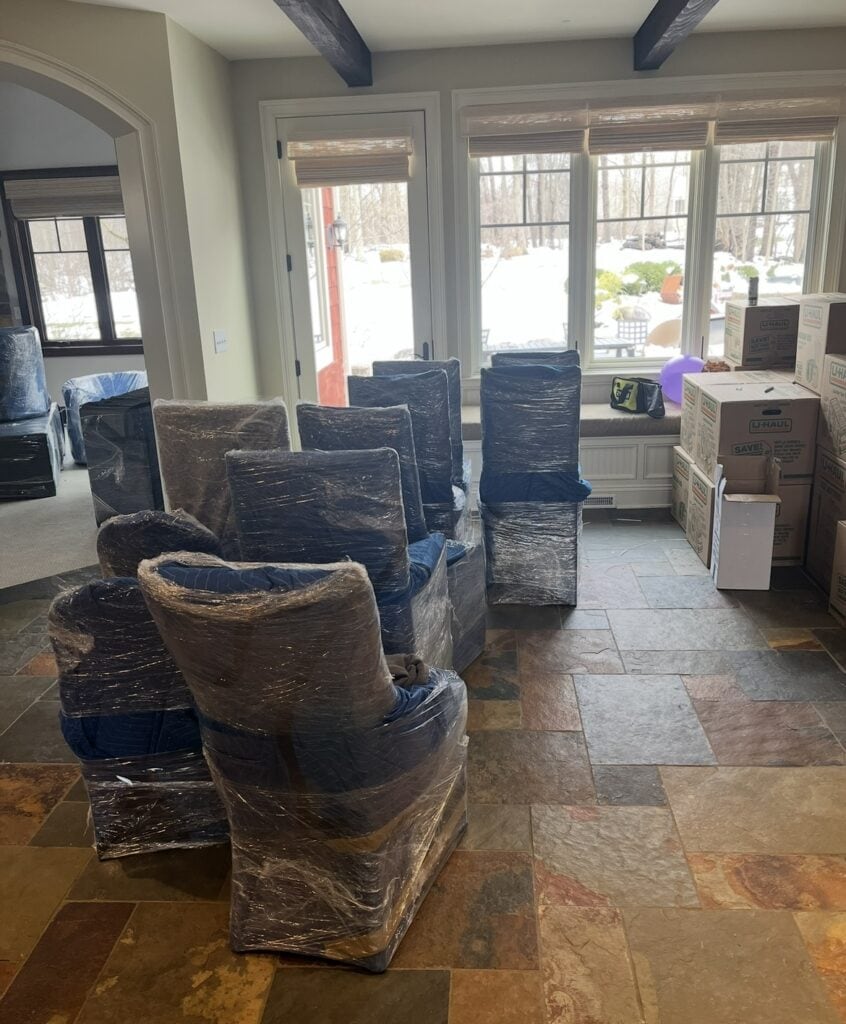


Preparing for a move involves more than getting everything into boxes. How those boxes are packed, what’s sitting on your furniture, and how clearly you identify items that should stay behind all affect how the day goes.
At Harrington Moving, we see these details firsthand on moves throughout Greater Cleveland and Akron. A little preparation helps our crew protect your furniture, load the truck efficiently, and keep your new home organized as we unload.
Here’s what we recommend before your movers arrive.
Finish packing so your crew can get started
Unfinished packing is one of the most common reasons moving day takes longer and feels more stressful.
Our crew needs to see what’s ready, prepare the furniture, and plan how everything will fit in the truck. When belongings are still sitting on desks, beds, dressers, and tables, those pieces may need to wait until someone clears them.
The same issue affects loading. If boxes and loose items are still being packed throughout the day, the crew has to keep adjusting as more belongings become ready.
Think of preparing a meal for a large group before all the guests have placed their orders. You can start, but coordinating everything becomes harder when you don’t yet know the full picture.
If you’re handling your own packing, aim to have it finished before the crew arrives.
Pack boxes that close properly and stack securely
A packed box should be manageable to carry and able to close completely.
Common problems include boxes that are too heavy, boxes with so much empty space that they crush when stacked, and overfilled boxes with belongings sticking out of the top.
These issues make it harder to use the truck’s space effectively. They can also limit where a box can safely go in the load.
As you pack:
- Use smaller boxes for heavy belongings, such as books.
- Keep individual boxes at a manageable weight.
- Fill empty space with suitable packing material.
- Close and tape boxes securely.
- Label boxes with their destination room.
The goal is a stable box that protects its contents and can be carried and stacked safely.
Clearly mark anything the movers should leave behind
Set aside essentials, valuables, and anything you plan to transport yourself before moving begins.
Choose one designated area, or use clearly visible labels or colored tape. Tell your crew what the markings mean when they arrive.
Simply pointing to something and saying, “That’s not going,” leaves room for confusion. There may be six workers on a job, and someone may be elsewhere when you give that instruction. We work to communicate those details, but a visible label keeps the instruction attached to the item throughout the day.
This is especially useful for belongings you’ll need immediately, such as medications, chargers, important documents, and your family’s overnight bags.
Don’t overlook the garage, basement, and attic
People often finish packing the main rooms while leaving storage areas largely untouched.
A garage or basement might contain dozens of small boxes, loose tools, seasonal decorations, and miscellaneous supplies. Where appropriate, consolidate those smaller items into sturdy moving boxes.
That preparation helps at both ends of the move. Your belongings may fit neatly in your current home because they’re spread across shelving, tucked into drawers, or hanging on walls. At the new house, that storage may not be ready.
Shelves may still need to be assembled. Cabinets may be smaller. Wall hooks may not be installed. Items that previously had a place can quickly cover the floor.
Packing those belongings into stackable boxes gives us more options for placing them neatly while you get your new storage areas ready.
If you aren’t finished, make a clear plan
Moving is stressful and time consuming. Sometimes life gets in the way, and packing doesn’t get finished. You won’t be the first or last person in that situation.
What helps most is recognizing what’s unfinished and communicating it clearly.
Before the crew starts, identify anything you still need to pack and explain what you’ll handle yourself. Separate those items from the belongings that are ready to load.
If you expect to need packing help, discuss it with your moving company before moving day so the crew can plan for the work and supplies involved.
Give your crew room to work
The night before your move, clear routes through the house and remove loose belongings from furniture that needs to be moved. Make sure stairs, doorways, and walkways are accessible, and confirm where the truck can park.
If you’re unsure whether to disassemble a piece of furniture or how to prepare an unusual item, ask ahead of time. That gives everyone a clear plan before the work begins.
A successful moving day doesn’t require a perfectly organized house. Finished packing, clear instructions, and accessible furniture give your movers a strong start—and give you fewer things to manage while the move is underway.
Preparation can also affect the time your move takes. Our guide to moving costs in Cleveland explains how readiness, crew size, and the work involved shape a moving estimate.
Planning a local move in Greater Cleveland or Akron? Request a moving quote from Harrington Moving and tell us about your home, your belongings, and any packing help you may need.